Technology is constantly evolving, and new innovations are changing how people interact with the world around them. While some technologies take years to become widely available, others can move from experimental concepts to everyday products surprisingly quickly.
Emerging technologies such as advanced artificial intelligence, robotics, extended reality, quantum computing, smart infrastructure, and next-generation connectivity could have a significant impact on businesses and consumers in the coming years.
Understanding these developments can help people recognize new opportunities and prepare for a rapidly changing digital environment.
Advanced Artificial Intelligence
Artificial intelligence is likely to remain one of the most important areas of technological development. Current AI systems can already analyze information, understand language, generate content, and assist with many digital tasks.
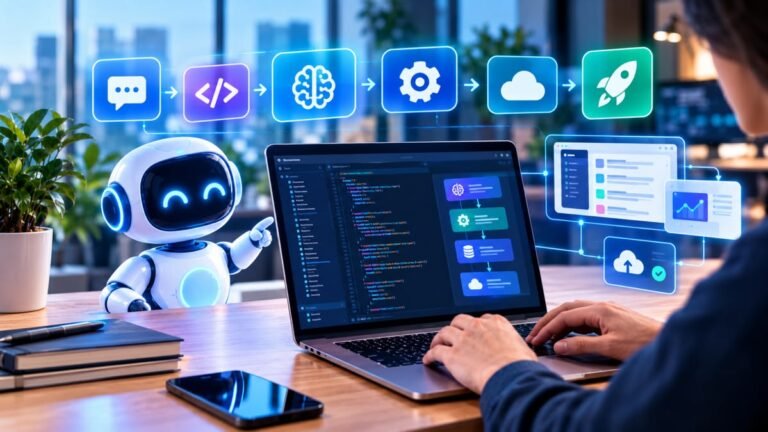
Future AI systems may become better at handling complex workflows and working across multiple applications. Instead of simply answering individual questions, AI assistants may increasingly help users organize projects, analyze information, automate routine tasks, and coordinate digital activities.
Businesses may also use AI to improve customer service, research, marketing, software development, and operational efficiency.
However, responsible development will remain essential. Accuracy, privacy, security, transparency, and human oversight will be important as AI capabilities continue to advance.
Robotics and Intelligent Machines
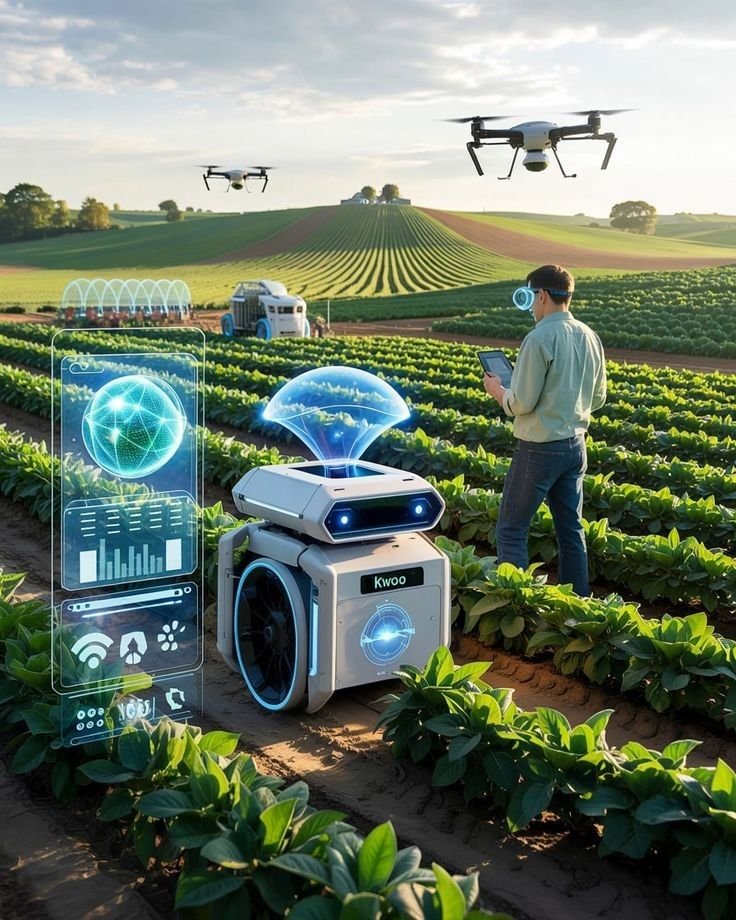
Robotics is another field that could experience major growth. Robots are already used in manufacturing, warehouses, healthcare research, agriculture, and other specialized environments.
As sensors, artificial intelligence, batteries, and mechanical systems improve, robots may become capable of performing more complex tasks.
Future robots could assist with logistics, maintenance, manufacturing, agriculture, and potentially household activities. The combination of robotics and AI may allow machines to operate more effectively in environments that previously required extensive human control.
The expansion of robotics could also change the skills required in many industries, increasing demand for people who can design, operate, maintain, and supervise automated systems.
Extended Reality
Extended reality includes technologies such as virtual reality and augmented reality. These technologies can create immersive digital environments or place digital information over the physical world.
Virtual reality can provide immersive experiences for entertainment, training, education, and simulation. Augmented reality can display useful information while users continue to interact with their physical surroundings.
Future applications could include virtual meetings, interactive education, professional training, product demonstrations, tourism experiences, and new forms of entertainment.
As hardware becomes lighter and more comfortable, extended-reality technology could become easier for more people to use.
Quantum Computing
Quantum computing is a developing area of computer science that uses principles of quantum mechanics to approach certain computational problems in fundamentally different ways.
Quantum computers are not simply faster versions of ordinary computers. They are designed for particular types of problems that may be difficult for conventional systems to handle efficiently.
Potential applications include scientific research, optimization, materials development, and certain areas of cryptography.
Quantum computing is still an evolving technology, and practical large-scale applications remain an important research challenge. Nevertheless, continued progress could eventually create new possibilities across science and industry.
Next-Generation Connectivity
Internet connectivity continues to improve through advances in mobile networks, fiber infrastructure, satellites, and wireless technologies.
Faster and more reliable connectivity can support cloud computing, smart devices, remote work, digital education, connected vehicles, and other applications.
Future networks may focus not only on speed but also on lower latency, greater reliability, improved energy efficiency, and the ability to connect huge numbers of devices.
Better connectivity could also help expand digital services in areas where traditional infrastructure has historically been limited.
Smart Cities
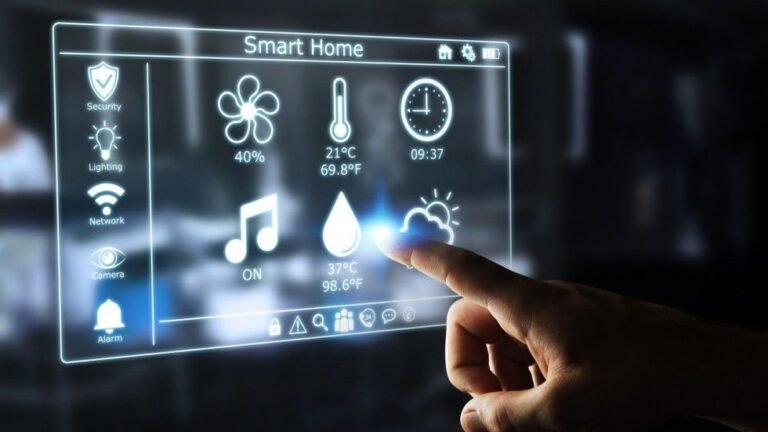
Cities are becoming increasingly connected through sensors, digital systems, and data-driven services.
Smart-city technologies can help monitor traffic, energy consumption, public transportation, waste management, environmental conditions, and infrastructure.
For example, connected traffic systems may help authorities understand congestion patterns and improve transportation planning. Smart energy systems can also provide information that helps manage electricity consumption more efficiently.
However, smart-city development must consider privacy, cybersecurity, accessibility, and responsible data management.
Renewable Energy Technology
Energy technology is another area experiencing rapid innovation. Improvements in solar power, wind energy, batteries, energy storage, and smart-grid systems could influence how electricity is generated and managed.
Better energy storage is particularly important because renewable sources such as solar and wind can vary depending on environmental conditions.
Advances in battery technology and grid management could make renewable energy systems more flexible and reliable.
Technology may therefore play an important role in creating more efficient and sustainable energy systems.
Biotechnology and Digital Innovation
The combination of technology and biology is creating new opportunities in areas such as medicine, agriculture, and scientific research.
Modern computing can help researchers analyze enormous biological datasets and identify patterns that would be difficult to examine manually.
Advances in biotechnology may contribute to improved research methods, more personalized approaches to healthcare, and more efficient agricultural practices.
Because biotechnology can have significant ethical and safety implications, responsible research and appropriate oversight will remain important.
Autonomous Transportation
Vehicles are becoming increasingly computerized. Driver-assistance systems can already provide features such as automated braking, lane assistance, parking support, and adaptive driving functions.
Future developments may bring greater levels of automation to cars, trucks, delivery systems, and other forms of transportation.
Autonomous transportation could potentially improve logistics and reduce some human-error-related risks. However, reliable autonomous systems require extensive testing, strong safety standards, and appropriate regulation.
Personalized Digital Experiences
Technology is becoming increasingly personalized. Digital services can analyze user preferences and provide customized recommendations, interfaces, and content.
In the future, personalization may become more sophisticated as AI systems gain a better understanding of individual needs.
For example, educational platforms could adapt learning materials to different skill levels, while productivity applications could customize workflows based on user behavior.
Personalization can improve convenience, but it also makes privacy and data control increasingly important.
The Growing Importance of Cybersecurity
As emerging technologies become interconnected, cybersecurity will become even more important.
A connected world creates more opportunities for digital attacks, data theft, system disruption, and other security problems. Organizations will need to protect not only computers and servers but also smart devices, vehicles, industrial systems, and cloud infrastructure.
Future security systems may use AI to identify unusual behavior and respond to threats more quickly.
Individuals will also need stronger digital-security habits as more personal and professional activities move online.
Technology and the Future of Work
Emerging technologies will influence the workplace in many ways. Some tasks may become automated, while entirely new roles and industries may emerge.
Workers may increasingly need skills related to digital tools, data analysis, AI, cybersecurity, communication, creativity, and problem-solving.
Continuous learning will become particularly valuable because the tools used in many professions may change rapidly.
Rather than preparing for one fixed technology, workers can benefit from developing adaptable skills that allow them to learn new systems as they appear.
Responsible Innovation
Technological progress can create significant benefits, but innovation should also be responsible. Developers and organizations need to consider questions related to safety, privacy, accessibility, environmental impact, and fairness.
Users also have a role to play by understanding the technologies they adopt and making informed decisions.
The most successful technologies are likely to be those that solve real problems while respecting the needs and rights of the people who use them.
Conclusion
Emerging technologies have the potential to reshape many aspects of modern life. Artificial intelligence, robotics, extended reality, quantum computing, advanced connectivity, renewable energy, biotechnology, and smart infrastructure are all areas worth watching.
Some predictions may take longer than expected, while others could develop faster than anticipated. What remains clear is that technological change will continue.
By staying informed, developing adaptable skills, and using new technologies responsibly, individuals and organizations can better prepare for the opportunities and challenges of the future.