Artificial intelligence has moved from being a futuristic concept to becoming a practical part of modern digital life. People interact with AI in many ways, sometimes without even realizing it. Search engines, recommendation systems, voice assistants, navigation applications, customer-support tools, translation services, and content platforms increasingly rely on artificial intelligence.
As AI technology continues to develop, its influence is expected to expand across homes, workplaces, education, healthcare, transportation, entertainment, and communication. Understanding how artificial intelligence is changing everyday life can help people make better use of these technologies while remaining aware of their limitations.
What Is Artificial Intelligence?
Artificial intelligence refers to computer systems designed to perform tasks that normally require certain forms of human intelligence. These tasks can include recognizing patterns, understanding language, analyzing information, making predictions, and generating content.
Modern AI systems can process large amounts of information quickly. Some systems are designed for specific purposes, while newer generative AI tools can create text, images, audio, software code, and other types of digital content.
AI does not think exactly like a human. It operates using algorithms, data, models, and computing resources. Understanding this distinction is important because AI-generated information can sometimes be inaccurate or incomplete.
AI in Smartphones
Smartphones have become one of the most common ways people interact with artificial intelligence. Modern devices can use AI for photography, voice recognition, translation, security, recommendations, and battery optimization.
For example, smartphone cameras can automatically recognize scenes and adjust settings to improve photographs. Voice assistants can interpret spoken commands and perform tasks such as setting reminders or searching for information.
AI can also help smartphones organize photos, identify objects, improve image quality, and filter unwanted messages.
As mobile processors become more capable, more AI functions may be performed directly on devices rather than depending entirely on remote servers.
AI and Online Search
Search technology is also changing as artificial intelligence becomes more advanced. Traditional search systems primarily return lists of webpages, while newer AI-powered systems can provide summarized explanations and help users explore complicated topics.
This can make information discovery faster, especially when users have questions that require several related concepts.
However, users should still verify important information. AI systems can sometimes misunderstand questions or produce incorrect answers. For important decisions, checking reliable sources remains essential.
AI in Communication
Artificial intelligence is changing digital communication in several ways. Translation tools can help people communicate across languages, while writing assistants can help users improve grammar, structure, and clarity.
AI-powered email systems can also organize messages, identify potentially important information, and assist with drafting responses.
These tools can save time, particularly for people who handle large amounts of digital communication. However, users should review AI-generated messages before sending them to ensure that the information and tone are appropriate.
AI in Education
Education is another area where AI can provide useful support. Students can use AI-powered learning tools to receive explanations, practice questions, summaries, and personalized study assistance.
Teachers can also use technology to organize educational materials, create exercises, and analyze learning patterns.
The most effective use of AI in education should support learning rather than replace it. Students still need to understand concepts, evaluate information, and develop independent thinking skills.
Using AI simply to complete assignments without understanding the material can reduce the educational value of the process.
AI in Healthcare
Artificial intelligence is increasingly being explored and used in healthcare-related applications. AI can assist with analyzing medical images, organizing information, supporting administrative work, and identifying patterns in large datasets.
Healthcare professionals may use advanced software to support research and decision-making. AI can potentially help organizations improve efficiency and process large amounts of information.
However, healthcare is a sensitive field, and AI systems should not be treated as a replacement for qualified medical professionals. Important health decisions require appropriate professional evaluation and reliable medical information.
AI in Transportation
Transportation is another area being influenced by artificial intelligence. Navigation applications already use algorithms to estimate travel times, identify traffic patterns, and recommend routes.
AI can also support driver-assistance systems by helping vehicles detect objects, monitor surroundings, and provide warnings.
The future of transportation may involve increasingly automated vehicles and smarter traffic-management systems. These technologies could potentially improve efficiency and safety, but their development also requires careful testing, regulation, and human oversight.
AI in Entertainment
Many entertainment platforms use AI to personalize recommendations. Streaming services, music platforms, video applications, and online stores can analyze user activity and suggest content that may be relevant to individual interests.
This personalization can make it easier to discover movies, music, videos, games, and other content.
At the same time, recommendation algorithms can create highly personalized information environments. Users may benefit from occasionally exploring content outside their usual recommendations to maintain a broader perspective.
AI and the Workplace
Artificial intelligence is changing how many professionals perform everyday tasks. AI tools can help summarize documents, analyze information, organize data, generate ideas, assist with customer service, and automate repetitive processes.
Rather than simply replacing workers, AI may change the responsibilities associated with many jobs. Employees may increasingly be expected to understand how to use AI tools effectively and evaluate their results.
Human skills such as leadership, creativity, communication, emotional intelligence, and critical thinking will remain valuable because many tasks require context and judgment that technology cannot fully provide.
AI and Creativity
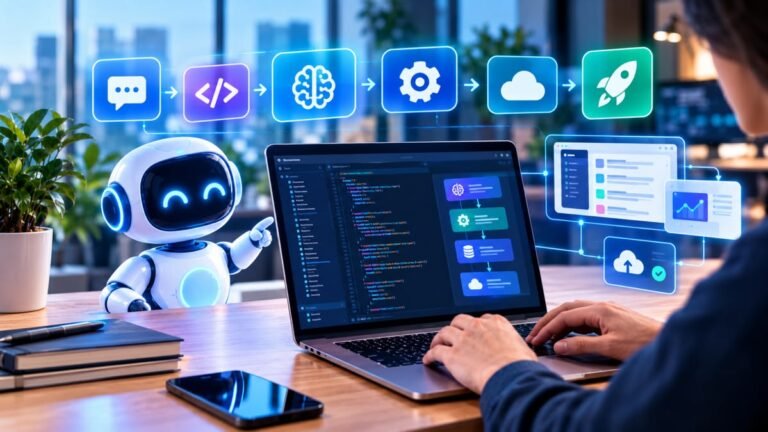
Generative AI has created new possibilities for digital creativity. People can use AI tools to brainstorm ideas, create visual concepts, develop outlines, experiment with writing styles, and assist with other creative processes.
For designers, writers, developers, marketers, and other creators, AI can function as a productivity tool.
However, human creativity remains important. AI-generated material should be reviewed, edited, and shaped according to the creator’s goals. Original thinking and personal experience can add qualities that automated systems may not reproduce effectively.
Privacy and Artificial Intelligence
The growing use of AI also raises important privacy questions. AI systems may process large quantities of information, depending on how a particular service is designed.
Users should therefore understand what information they provide to online platforms. Sensitive personal information should not be entered into unfamiliar AI tools without considering the service’s privacy practices.
Organizations also have a responsibility to handle user data carefully and implement appropriate security measures.
The Importance of Human Oversight
One of the most important principles for using AI responsibly is human oversight. Artificial intelligence can process information quickly, but speed does not guarantee accuracy.
People should review important AI-generated information, especially when decisions could have financial, professional, legal, educational, or health-related consequences.
AI works best when it supports human judgment rather than being treated as an unquestionable authority.
Preparing for an AI-Powered Future
As artificial intelligence becomes more common, digital literacy will become increasingly valuable. People should learn the basics of how AI works, understand its strengths and weaknesses, and develop the ability to evaluate AI-generated information.
Students can learn how to use AI as a study assistant while maintaining independent research skills. Professionals can explore AI tools relevant to their industries. Businesses can identify repetitive processes where automation may improve efficiency.
The goal should not be to compete against every new technology but to learn how to work effectively alongside it.
Conclusion
Artificial intelligence is becoming an important part of everyday life. From smartphones and search engines to education, transportation, entertainment, and workplaces, AI is changing how people interact with technology.
These developments offer significant opportunities for convenience, productivity, creativity, and innovation. At the same time, responsible use requires attention to accuracy, privacy, security, and human judgment.
The future of AI will depend not only on how powerful the technology becomes but also on how thoughtfully people choose to use it. By developing digital skills and maintaining a critical approach to AI-generated information, individuals can take advantage of its benefits while managing its challenges.