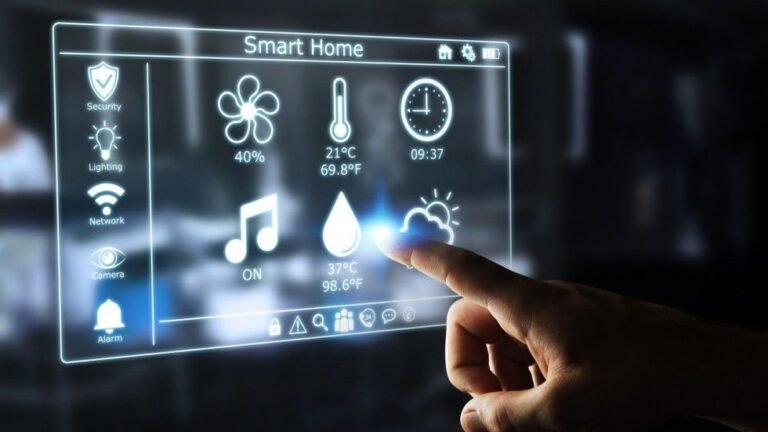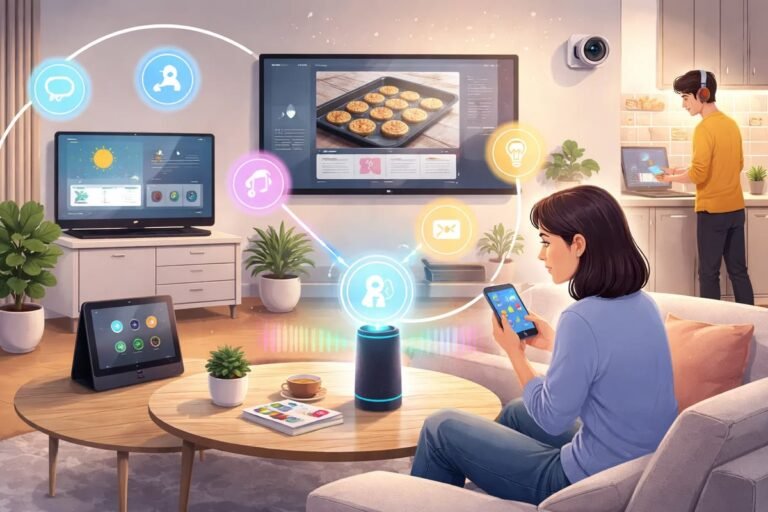
Technology is changing the modern home in ways that were difficult to imagine only a few decades ago. From smart lighting and connected televisions to security cameras, thermostats, appliances, and voice assistants, many household devices can now connect to the internet and communicate with one another.
Smart home technology is designed to make everyday activities more convenient, efficient, secure, and personalized. As connected devices become more affordable and easier to use, smart technology is becoming accessible to a wider range of households.
What Is Smart Home Technology?
Smart home technology refers to connected devices and systems that can be controlled automatically or remotely.
These devices may connect through wireless networks and can often be managed using smartphones, tablets, voice assistants, or dedicated control systems.
A smart home can be relatively simple, such as a few connected lights, or more advanced, with multiple systems working together.
The main goal is to make household technology easier to manage and more responsive to the needs of residents.
Smart Lighting
Smart lighting is one of the easiest ways to introduce technology into a home.
Connected bulbs and switches can often be controlled through mobile applications or voice commands. Users may be able to schedule lights, adjust brightness, or turn lights on and off remotely.
Smart lighting can also contribute to energy efficiency because lights can be scheduled to operate only when needed.
For example, homeowners can create routines that automatically turn certain lights off at night or activate outdoor lighting at particular times.
Smart Thermostats
Smart thermostats can help manage indoor temperatures more efficiently.
Traditional thermostats generally require manual adjustments, while smart systems can provide additional features such as scheduling, remote control, and temperature monitoring.
Some systems can learn household patterns and adjust settings according to preferences.
Reducing unnecessary heating or cooling can potentially lower energy consumption, although actual savings depend on the home, climate, equipment, and usage patterns.
Smart Home Security
Security is one of the most popular applications of smart technology.
Connected cameras, doorbells, locks, sensors, and alarm systems can provide homeowners with additional information about activity around their properties.
Some systems can send notifications when movement is detected or when someone approaches a monitored entrance.
Smart locks can also provide convenient access controls, allowing homeowners to manage digital permissions rather than relying entirely on traditional keys.
Security devices should be configured carefully because they can collect sensitive information about a home and its occupants.
Smart Appliances
Modern appliances are increasingly incorporating connectivity and automation.
Smart refrigerators, washing machines, ovens, vacuum cleaners, and other devices can offer features such as remote monitoring, scheduling, notifications, and automated operation.
For example, a connected washing machine may notify the user when a cycle is finished.
These features can make household management more convenient, especially for people who have busy schedules.
Voice Assistants
Voice-controlled technology allows users to interact with smart devices without physically operating a switch or application.
Voice assistants can help with tasks such as setting reminders, checking information, controlling compatible lights, playing music, or managing certain household devices.
Voice control can also improve accessibility for people who may find traditional controls difficult to use.
However, because voice-enabled devices may listen for commands, users should understand the device’s privacy settings and data practices.
Smart Entertainment
Entertainment systems are also becoming more connected.
Smart televisions and streaming devices allow users to access digital content without requiring separate traditional equipment for every service.
Connected speakers can also provide synchronized audio throughout different rooms.
Smart entertainment systems can create personalized experiences based on user preferences, although people should remain aware of how viewing and listening activity may be collected and used.
Home Energy Management
Smart technology can provide homeowners with better information about energy consumption.
Connected meters, plugs, thermostats, and appliances can help users identify which devices consume the most electricity.
This information can encourage more efficient habits.
For example, a homeowner might discover that certain appliances consume significant amounts of energy when left operating unnecessarily.
Technology can therefore help turn energy management from guesswork into a more measurable process.
Smart Home Automation
One of the biggest advantages of connected devices is automation.
Different devices can be programmed to work together according to specific conditions or schedules.
A morning routine might automatically adjust lights, start selected appliances, and provide reminders. An evening routine could turn off unnecessary devices and activate security systems.
Automation can reduce the number of small tasks people need to remember throughout the day.
Benefits for Accessibility
Smart technology can provide valuable accessibility features.
Voice commands, automated lighting, remote controls, smart locks, and other connected systems may help people who have difficulty reaching physical controls or moving between rooms.
For older adults or individuals with certain mobility challenges, appropriate smart-home features can provide additional convenience and independence.
The usefulness of these technologies depends on proper setup and individual needs.
Smart Homes and Privacy
Connected devices can collect information about how a household operates.
Depending on the device, data may include activity patterns, device usage, voice interactions, locations, or other information.
Homeowners should therefore review privacy settings and choose reputable products.
Strong passwords, updated software, secure wireless networks, and multi-factor authentication where available can help reduce security risks.
Compatibility Matters
One challenge with smart homes is that not every device works perfectly with every platform.
Before purchasing a connected device, users should check whether it is compatible with their existing ecosystem.
A household with devices from many different platforms may eventually become difficult to manage.
Choosing compatible products can make automation simpler and reduce unnecessary technical problems.
The Cost of Smart Technology
Smart-home technology can range from inexpensive devices to sophisticated systems requiring significant investment.
Users do not need to convert an entire home into a smart home at once.
Starting with one or two useful devices can be a practical approach. Homeowners can then determine whether the technology provides enough value before expanding.
The best smart-home setup is not necessarily the one with the largest number of devices. It is the one that solves genuine problems.
The Future of Smart Homes
Future homes may become increasingly automated as artificial intelligence, sensors, connectivity, and energy technology improve.
AI systems could help coordinate different household devices and adapt routines according to individual preferences.
Smart homes may also become more energy-aware, automatically adjusting heating, cooling, lighting, and appliances to reduce unnecessary consumption.
However, convenience should be balanced with privacy, security, reliability, and user control.
Conclusion
Smart technology is changing modern homes by making lighting, security, appliances, entertainment, energy management, and everyday routines easier to control.
The benefits can include convenience, automation, accessibility, and potentially improved energy efficiency. At the same time, connected devices create responsibilities related to privacy, cybersecurity, compatibility, and responsible data use.
Homeowners can benefit from starting with technologies that solve real problems and expanding gradually. With thoughtful planning and appropriate security practices, smart-home technology can become a useful part of modern living.