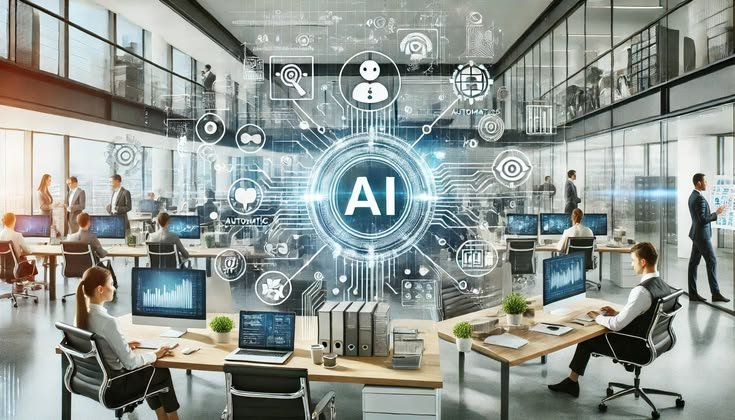
Artificial intelligence is becoming one of the most influential technologies in the modern business world. Companies of all sizes are exploring AI to improve productivity, automate repetitive processes, understand data, communicate with customers, and support better decision-making.
AI is not simply a technology for large technology companies anymore. Businesses in retail, finance, healthcare, education, manufacturing, marketing, transportation, and many other industries are finding practical ways to use intelligent software.
As AI capabilities continue to develop, the workplace is also changing. Employees are learning to work alongside AI tools, while organizations are reconsidering how everyday tasks can be completed more efficiently.
What Does AI Mean for Businesses?
Artificial intelligence allows computer systems to perform tasks that can involve pattern recognition, language processing, prediction, classification, and content generation.
For businesses, this can mean using software to process information faster or automate tasks that previously required significant amounts of manual work.
AI can assist employees rather than necessarily replacing them. In many situations, technology handles repetitive processes while people focus on communication, creativity, strategy, and complex decisions.
Automating Repetitive Tasks
One of the most practical applications of AI is automation.
Many workplaces contain repetitive activities such as organizing information, processing routine requests, creating summaries, sorting documents, or responding to common customer questions.
AI-powered systems can help automate some of these activities. This can save employees time and allow them to concentrate on higher-value responsibilities.
Automation can also reduce the amount of manual work involved in large-scale operations. However, automated processes should still be monitored to ensure that errors are identified and corrected.
Improving Customer Service
Customer service is another area where AI is having a major impact.
AI-powered chat systems can answer common questions, provide basic information, guide users through simple processes, and direct complicated issues to human representatives.
This can make customer support available outside traditional business hours. It can also reduce waiting times when customers have straightforward questions.
Human customer-service representatives remain important for complex or sensitive situations where empathy, judgment, and detailed understanding are required.
AI and Business Data
Modern organizations generate enormous amounts of information. Analyzing this data manually can be difficult and time-consuming.
AI can help businesses identify patterns and relationships within large datasets. Companies can use these insights to understand customer behavior, monitor operations, forecast demand, and support strategic planning.
The quality of the results depends heavily on the quality of the underlying data. Businesses therefore need reliable data-management practices alongside AI systems.
Marketing and Content Creation
AI is also changing digital marketing.
Businesses can use AI tools to generate ideas, analyze audiences, organize campaigns, summarize research, and assist with content creation.
Marketing teams can use these tools to speed up routine work while maintaining human oversight over messaging and brand identity.
AI-generated content should be reviewed carefully before publication. Human editors can check accuracy, originality, tone, and relevance.
AI in Human Resources
Human resources departments can use technology to organize information, assist with administrative processes, support employee communication, and analyze workforce trends.
AI may help organizations identify patterns in workforce data or automate certain administrative activities.
However, decisions involving employees require careful consideration. Businesses should avoid relying blindly on automated systems for sensitive decisions and should consider fairness, transparency, and potential bias.
Supporting Software Development
AI-assisted development tools are becoming increasingly useful for software professionals.
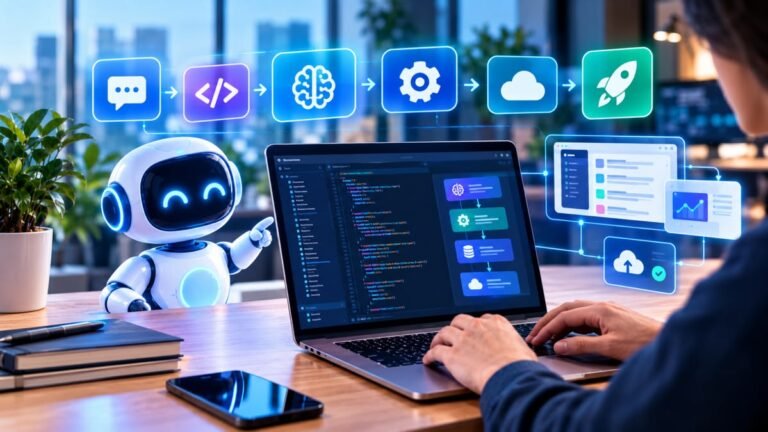
Developers can use AI to explain code, generate initial code structures, identify potential problems, write documentation, and assist with repetitive programming tasks.
These tools can improve productivity, but generated code should always be reviewed and tested. Developers remain responsible for ensuring that software is secure, reliable, and suitable for its intended purpose.
AI and Remote Work
Remote and hybrid work have increased the need for effective digital collaboration.
AI can assist with meeting summaries, task organization, document analysis, scheduling, and communication.
For distributed teams, these capabilities can reduce administrative work and make it easier to manage large amounts of digital information.
The most effective use of AI in remote work is generally focused on reducing unnecessary tasks rather than creating additional complexity.
Changing Employee Skills
The introduction of AI is changing the skills employees need.
Technical knowledge can be valuable, but workers also need critical thinking, communication, creativity, problem-solving, and the ability to evaluate information.
Employees who understand how to use AI responsibly may be able to complete certain tasks more efficiently.
This means organizations may need to invest in training programs that help employees understand both the capabilities and limitations of AI.
AI and Decision-Making
AI can provide useful insights that support business decisions. For example, a system may identify trends in sales data or highlight unusual patterns in business operations.
However, AI-generated recommendations should not automatically be treated as correct.
Business decisions often involve factors that cannot be fully represented in a dataset. Human experience, context, ethics, and long-term goals can all matter.
AI is generally most useful when it supports human decision-makers rather than replacing human judgment entirely.
Cybersecurity and AI
Artificial intelligence can also contribute to cybersecurity.
Security systems can use automated analysis to identify unusual activity and potentially detect threats more quickly.
At the same time, criminals can also use advanced technologies to create more sophisticated attacks. This means businesses need to continuously improve their security practices.
Strong authentication, employee awareness, software updates, monitoring, and appropriate security policies remain important regardless of how advanced AI becomes.
Privacy and Responsible AI
Businesses must consider privacy when implementing AI systems.
Depending on the application, AI tools may process customer information, employee data, business documents, or other sensitive material.
Organizations should understand how their chosen AI systems handle data and should establish clear policies for employees.
Responsible AI also involves considering accuracy, fairness, transparency, and accountability.
The Future of AI in the Workplace
AI adoption is likely to continue as businesses discover new applications.
Future AI systems may become better at handling multi-step workflows, analyzing complex information, and working across different business applications.
This could create more opportunities for employees to focus on strategic and creative activities.
At the same time, businesses will need to manage workforce changes carefully. Training, communication, and thoughtful implementation can help employees adapt to new ways of working.
How Businesses Can Prepare
Organizations interested in adopting AI should begin with clear objectives.
Instead of implementing AI simply because it is popular, businesses should identify specific problems that technology can solve.
They can start with smaller projects, measure results, train employees, and gradually expand successful systems.
It is also important to establish policies covering data protection, human oversight, security, and responsible use.
Conclusion
Artificial intelligence is transforming modern businesses by improving automation, customer service, data analysis, marketing, software development, and workplace productivity.
The biggest opportunity may not be replacing human workers but helping people work more effectively. AI can handle certain repetitive or information-heavy tasks while employees focus on areas where human judgment, creativity, communication, and experience are especially valuable.
Businesses that approach AI thoughtfully can benefit from greater efficiency while reducing many of the risks associated with poorly planned technology adoption. As AI continues to evolve, the ability to combine intelligent technology with strong human skills will become increasingly important.